Why most construction projects fail before a slab is poured — and what builders can do about it?
Delivering a project on time and on budget is one of the most satisfying outcomes in construction. It builds reputation, generates referrals, and earns respect across the industry. Yet for many builders and project managers, that outcome feels consistently out of reach — not because of bad execution on site, but because of problems that were never resolved in design.
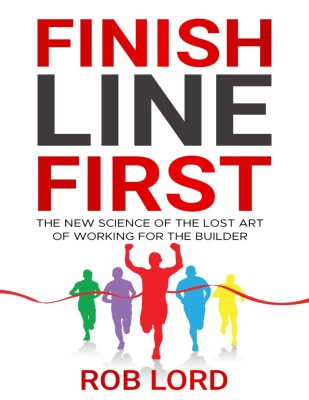
That’s the central argument of Finish Line First, a new eBook by Rob Lord of SEED Engineers. Written specifically for builders and project managers, it offers a practical framework for controlling cost, compliance, and program before construction starts — so that when work does begin, the team is building from a position of clarity rather than assumption.
Here’s a summary of what the book covers.
3 tips to help you deliver on time
Design backwards from the finish line. Rather than worrying about problems as they emerge, front-end planning asks teams to identify delivery risks before the project is mobilised. A structured workshop where designers and trades work backwards from the completion date — mapping milestones, identifying clashes, and outlining risk matrices — can surface issues that would otherwise cost ten times more to resolve on site. SEED provides risk matrices covering commissioning, fire, coordination, compliance, and passive fire protection to support this process.
Demand constructability, not just compliance. In premium projects, the most common cause of client disappointment isn’t material quality — it’s unresolved interfaces. Grilles misaligned with wall joints. Access panels cutting through feature ceilings. Thermostats positioned inconsistently. These are small issues individually, but collectively they create the perception that the project fell short. The book introduces the concept of the “resolution gap” — the distance between what a builder expects from the design and what the design team actually produces. That gap is expensive when it’s filled by RFIs during construction. It’s far less expensive when it’s resolved at documentation stage by the professionals hired to do it.
Lock scope before you lock price. Cost blowouts rarely come from labour or material shortages. They come from ambiguous scope, incorrect assumptions, and grey areas at trade interfaces. Conducting scope alignment workshops, agreeing responsibility matrices, and documenting exclusions and assumptions before subcontract award creates commercial certainty for everyone. When scope is unclear, price becomes unstable — and once a trade is offside, getting to the finish line first becomes very difficult.
The 3 most common mistakes builders make
Trusting that the design is complete. Documentation does not equal coordination. Services clashes, inadequate plant space, impossible access conditions, and fire compliance conflicts that contradict the architectural design are all common discoveries — but only after work has begun. Independent design reviews, early clash detection, and critical detail reviews at 1:20 and 1:10 scale are not optional. SEED conducts clash detection at Developed Design (LOD300), Tender Design (LOD350), and Construction (LOD400) as a matter of course.
Letting program pressure dictate drawing quality. A compressed program that forces drawings to site before they’re ready creates the Compression Spiral: skipped reviews lead to incorrect assumptions, which lead to rework, which compresses the program further. Research consistently shows that client and decision-related delays account for 20–35% of project delays, and design and coordination issues for a further 15–30%. Labour and material shortages, by contrast, account for less than 10%. The focus for project recovery should be on decisions, coordination, and construction details — not resourcing.
Treating compliance as someone else’s problem. Builders often assume that fire compliance belongs to the fire engineer, energy compliance to the services consultant, and general compliance to the certifier. But when sign-off stalls, it’s the builder who carries the cost and absorbs the delay. Modern buildings require compliance across fire engineering, energy modelling, acoustics, mould likelihood, mechanical ventilation, accessibility, structural performance, and environmental modelling. These reports don’t just need to exist — they need to be integrated across all disciplines and reflected in the architectural documentation. Projects don’t fail compliance through negligence. They fail through fragmentation.
3 insider strategies to restore project momentum
The builder who controls information controls the job. Fragmented information, conflicting versions, and verbal-only instructions are a predictable source of chaos. A single-source document platform, a weekly version register, a structured RFI log, and a risk dashboard visible to all leads are practical controls that reduce uncertainty and protect program. A $1 error at concept stage, the industry rule of thumb goes, costs $10 in design, $100 in construction, and $1,000 in operation. Skimping on the systems that surface those errors early is rarely the saving it appears to be.
Most program delays are decision delays. The job rarely stops because resources are unavailable. It stops because a decision wasn’t made, a detail wasn’t resolved, or a consultant didn’t respond. Controlling the decision pipeline — tracking deadlines, establishing escalation pathways, and maintaining a design issue register — keeps projects moving. One delayed decision rarely affects one trade. It typically affects the eight trades that depend on it.
The smartest builders buy clarity, not just design. A $10,000 specialist study at concept stage can prevent $500,000 in construction costs later. Early CFD modelling, acoustic analysis before a prefab decision is fixed, daylight and overheating studies before the façade is locked in — these are not extras. They are precision tools for removing risk and clarifying a position early, when the cost of doing so is still manageable. The best builders treat specialist input not as a cost line but as risk compression.
The bottom line
The builders and project managers who consistently reach the finish line first are not lucky. They are informed, well-prepared, and disciplined about resolving uncertainty early. Finish Line First provides the framework to do exactly that — covering front-end planning, constructability, scope control, information management, and the strategic use of specialist studies.
If you’re responsible for delivering a construction project and want to protect your program, your margin, and your reputation, this eBook is worth your time.