Personal Context
Nearly thirty years ago, I was out on the town in Sydney as a young pup running with colleagues from ARUP. That very day, archaeologists had discovered some early structures from Australia’s first settlement days on the current site of the NSW Conservatorium of Music, a site we had been working on.
My British brothers lamented that “Australia had no history”, and, in comparison to the structures in UK they were discussing, I couldn’t help but agree. Still, it needled me.
With grey hair, comes a slow wisdom – heritage buildings are more than just old buildings – they are links to our past, our memories, and they carry architectural, cultural and historical significance. Preserving them is important to future generations, but what is most important is preserving the memories of what made them valuable.
I think NSW Heritage Office summed it up best –

Preserving their integrity while adapting them for modern use presents complex challenges, especially when upgrading essential services like air conditioning, lighting and fire protection.
In Australia, the Burra Charter provides a trusted framework for navigating these challenges. It’s purpose is to guide architects, engineers and building professionals in balancing heritage conservation with the demands of contemporary building services — ensuring that upgrades enhance functionality without compromising cultural value.
What is the Burra Charter — and why it matters for building services
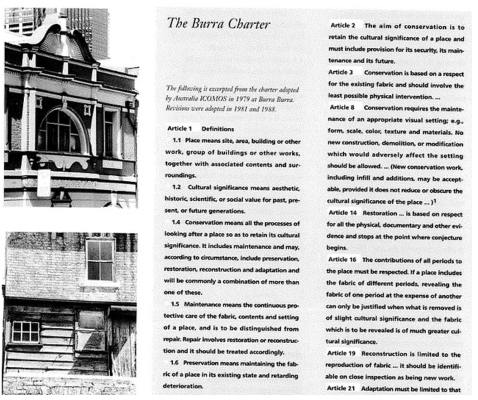
The Burra Charter, first adopted in 1979 by Australia ICOMOS, sets out internationally accepted principles and procedures for conserving places of cultural significance in Australia. The Charter emphasises understanding a place’s heritage values — its history, architecture, form and meaning — before undertaking any change.
For older buildings that need modern amenities (air‑conditioning, lighting, power, fire safety), the Charter is the guiding document: it tells us how to provide these services without undermining the heritage value of the place.
A snapshot of the document and its “recent” updates (1981 & 1988) is presented below. As a charter, it is a series of principles, or articles.
Challenges — Why building services in heritage buildings are tricky
Historic and heritage buildings often pose special difficulties for modern building services:
- Structural and architectural constraints: Older buildings may have thick masonry walls, decorative joinery, high ceilings, ornate plasterwork or delicate finishes. When considering installing ducts, cabling, vents or sprinkler systems, designers need to minimise the risk of damage or the risk of obscuring those heritage elements.
- Limited space for services: There may be limited or no existing cavities, voids or service risers. Creating new ones can require invasive cutting or drilling — something the Charter encourages avoiding.
- Risk of undermining heritage character: Visible modern fixtures (bulkhead air-conditioning units, exposed conduits, large vents, modern light fittings, sprinkler pipes) may clash with the historic character of spaces, undermining their authenticity and cultural significance.
- Regulatory and conservation limitations: For many heritage-listed or culturally significant buildings, any major change (especially visible ones) needs approval or special permit — and must comply with the Charter and associated conservation guidelines.
Thus, retrofitting a heritage building with modern services is not a straightforward “plug-and-play” exercise. It requires careful planning, heritage assessments, and specialised engineering combined with heritage conservation expertise.
Or… you could just learn from my observations….
Learning from my observations and mistakes
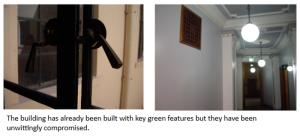
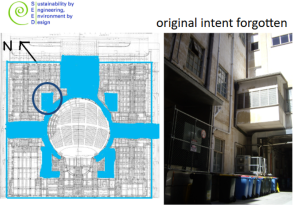
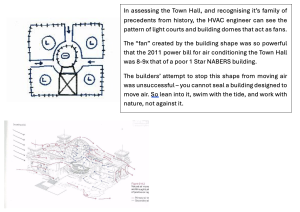
- The building will already have a way of providing comfort and air quality. I strongly encourage engineers to lean into that way. It has already been built. The image below is from the planning sessions for BCC City Hall Upgrades 2012, revealing the building detail that already existed for moving air through the building.
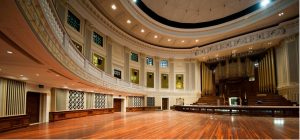
- Services from the floor prevents disruption to the ceiling’s features. This encourages displacement design. The image below shows the displacement system installed for Brisbane Town Hall.
- Piped services are a huge spatial advantage and can provide energy efficient solutions, capable of churn.
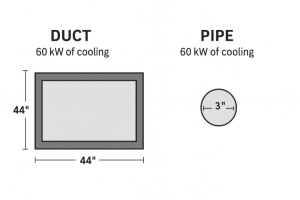
- VRF equipment is often acceptable for heritage consultants – the condensers can be piped a long way from the building, and the indoor units can be placed on floors or walls in a manner that does not obscure the heritage surfaces.
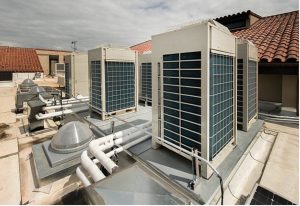
- atch out for equipment that causes vibrations. Preserving a structure means preventing the imposition of loads that were not originally designed. So, one easy strategy is to avoid through the wall air conditioners
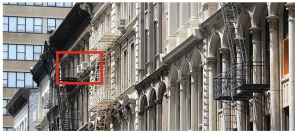
How the Burra Charter guides sensitive integration of services
The Burra Charter provides a roadmap for adding modern services into a heritage building:
- Assess heritage significance first — know what features are historically, architecturally or culturally important (walls, ceilings, joinery, spaces, views, materials) before deciding where and how to install services.
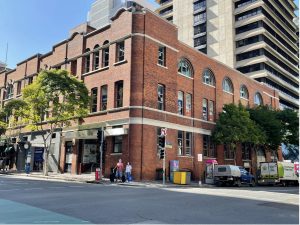
- Choose minimal and reversible interventions — the Charter encourages “doing as much as necessary, as little as possible”: adding services quietly, using existing voids or concealed spaces (ceilings, subfloors, existing conduits), avoiding unnecessary cutting or drilling, and ensuring any fixings can be reversed if needed.
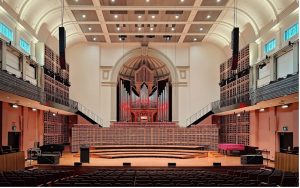
- Discreet placement of visible elements — where components must be visible (e.g. vents, grilles, light fixtures, smoke detectors), design them to suit the scale, materials, character and design of the heritage place so they blend or complement rather than intrude.
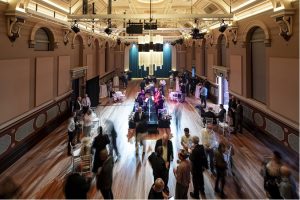
- Use of modern, efficient but adaptive systems where appropriate — avoid bulky traditional HVAC systems with large ductwork. Consider instead piped systems or modern alternatives like ductless systems;
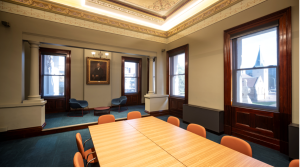
- Comprehensive documentation, stakeholder input, and heritage‑led design approach — any retrofit must follow a conservation‑management approach, with heritage professionals, engineers, and architects collaborating from the start.
What good building‑services retrofits look like in heritage buildings
- In many heritage-listed properties, power points and lighting wiring are installed using existing cavities or conduits, so no new invasive cuts are needed; new light fittings are used only where original fixtures are missing; and plumbing/wiring is hidden in sub-floor or ceiling spaces.
- For HVAC/air‑conditioning, rather than bulky ducted air-conditioning, modern, energy-efficient systems such as ductless or variable‑refrigerant‑flow (VRF) systems are used — minimising need for ducting and enabling more discreet installation.
- Fire‑suppression systems (sprinklers, fire alarms) and other safety-driven services are incorporated carefully, often in ways that make their piping and detectors as unobtrusive as possible, respecting heritage surfaces and avoiding damage to original fabric. This requires custom services design.
- The overall project is managed as a collaborative endeavour: heritage consultants, engineers, architects, and often local heritage authorities engage early, to assess significance, plan interventions, document heritage values — and deliver services that bring the building to contemporary standards while preserving its character.
Rethinking Light Courts
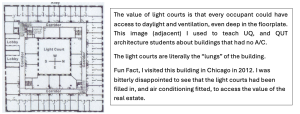
Building services and heritage doesn’t have to be a compromise
The Burra Charter offers a balanced, principled, and practical framework — not to freeze heritage buildings in time, but to enable their continued use with modern comfort and safety. For engineers, building services consultants, architects and heritage professionals, it means approaching HVAC, lighting, power, fire safety, plumbing and all “behind‑the‑scenes” systems with care, planning, creativity — and respect.
When done well, upgrading building services in heritage buildings won’t mean sacrificing history. Instead, it breathes new life into old buildings: making them safe, functional, energy‑efficient, and loved — and alive to future generations, while retaining the character and stories that make them special. A long-standing phrase I would teach students was that we sustain what we love.
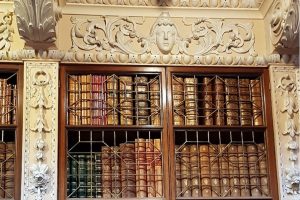
For lighting, that can mean illuminating the architectural details and features.
Building services PLUS heritage doesn’t have to EQUAL a compromise
Just as heritage buildings are treated with care, respect and a deep sense of responsibility, so too do Australia’s First Peoples regard the land — not merely as a resource, but as something sacred, alive with stories, identity and meaning.
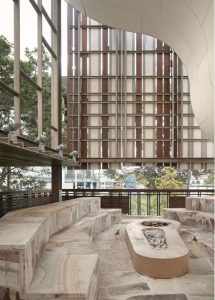
The Burra Charter’s emphasis on cultural significance echoes this worldview, reminding us that places — whether built or natural — deserve thoughtful stewardship. In both traditions, preserving the past is not about resisting change, but about honouring connection, continuity and collective memory for future generations.
The Burra Charter offers a balanced, principled, and practical framework — not to freeze heritage buildings in time, but to enable their continuing use with modern comfort and safety. For engineers, building services consultants, architects and heritage professionals, it means approaching HVAC, lighting, power, fire safety, plumbing and all “behind‑the‑scenes” systems with care, planning, creativity — and respect.
When done well, upgrading building services in heritage buildings doesn’t mean sacrificing history. Instead, it breathes new life into old buildings: making them safe, functional, energy‑efficient — and alive to future generations, while retaining the character and stories that make them special.