- March 27 2026
- Jonah Jean
Behind every well-performing building is a series of carefully considered decisions, calculations, and collaborations. At SEED Engineers, our mechanical and sustainability engineers play a critical role in shaping high-performing, efficient, and future-ready buildings. In this instalment of A Day in the Life, we speak with Sanuj, a Mechanical and Sustainability Engineer, about his journey into engineering, his day-to-day work, and the challenges and rewards that come with engineering modelling and design.
From Problem Solving to Building Performance
Sanuj specialises in mechanical building services design and has been working in the engineering field for around eight years, including four years in Australia. His interest in engineering was driven by a desire to make a meaningful difference through problem solving, combined with a strong affinity for mathematics and physics.
That passion now translates into work that directly influences building performance, sustainability outcomes, and occupant comfort across a wide range of projects.
Starting the Day with Structure and Focus
A typical workday for Sanuj starts around 8am, beginning with a coffee or tea while reviewing his task list for the day. From there, he prioritises emails and messages, flagging anything that requires immediate attention.
Urgent external matters such as client queries, coordination with project leaders, or design inputs for consultants are addressed first. Once these are resolved, he turns his attention to tasks requiring focused individual effort, including technical reports, engineering calculations, and advanced modelling work.
Engineering Modelling at the Core
The majority of Sanuj’s time is spent on software-based modelling and engineering analysis. His daily toolkit includes Microsoft Office applications, DesignBuilder, Pyrosim using FDS, and Bluebeam. These tools support a wide range of modelling tasks, from energy assessments to ventilation and CFD analysis.
Currently, Sanuj is working on engineering modelling and Green Star sustainability certification for a large, multi-disciplinary apartment project in Sydney. His role requires close collaboration with mechanical engineers, architects, other building services disciplines, and clients to ensure technical accuracy and alignment with broader project objectives.
Solving Complex Design Challenges
One of the most challenging aspects of Sanuj’s role is dealing with the limitations of modelling software when projects require non-standard solutions. In a recent
apartment project, he was tasked with modelling a day-night HVAC system operation. With no predefined templates available in the software, he configured and tested the model iteratively until the results aligned with real-world expectations.
This type of problem-solving requires a deep understanding of both engineering principles and the tools used to simulate them, as well as a willingness to think beyond standard workflows.
What Makes the Role Rewarding
For Sanuj, the most rewarding part of the job is seeing a project through to completion and knowing his work has contributed to a positive outcome. Whether it is improved energy efficiency, enhanced occupant comfort, or achieving sustainability targets, the impact of engineering decisions is tangible.
At the same time, coordinating with multiple external stakeholders across large projects remains one of the more challenging aspects of the role, requiring clear communication, adaptability, and collaboration.
Life Beyond the Desk
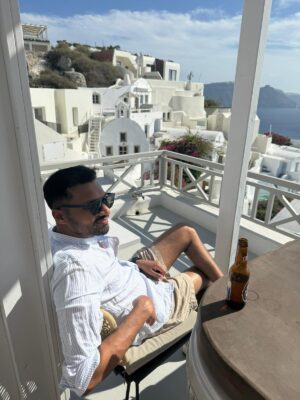
Outside of work, Sanuj enjoys cooking, travelling, reading, and seeking out new experiences. He finds time to recharge through walks or runs after work. His favourite food is lamprais, a traditional Sri Lankan dish, and while he has yet to commit to a local sporting team, he is still learning the ins and outs of Australian footy culture.
When asked what advice he would give to aspiring engineers, Sanuj emphasises the value of gaining practical experience early, ideally through time spent working with builders or construction teams. He also highlights a common misconception about engineering, noting that even small design changes can have significant downstream impacts due to the level of calculation, coordination, and critical thinking involved.
When asked for his favourite quote, Sanuj remarked that he doesn’t really have a favourite quote, but likes to live by this philosophy “I believe that we are responsible in some way for everything that happens to us in life and we alone have the power to change our circumstances.”