- April 8 2026
- Jonah Jean
Are you working harder but delivering less? Here’s what the construction system is doing to subcontractors — and how to fight back
If you’re a subcontractor, you already know the pressure. You’re expected to price quickly, coordinate flawlessly, absorb incomplete designs, and still deliver on time and on budget — often while being blamed for problems you didn’t cause.
The truth? You’re not failing. The system is designed to overload you.
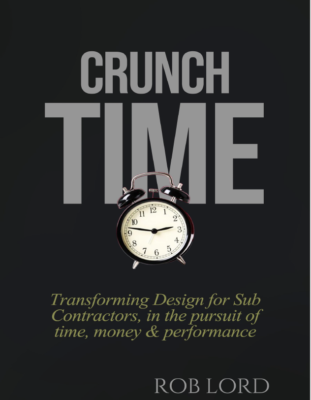
That’s the central message of Crunch Time, a new eBook by Rob Lord of SEED Engineers — an engineering firm that has spent over a decade helping subcontractors in the construction industry deliver better built outcomes, faster. Drawing on real project experience and industry research, the book cuts through the noise to give you actionable strategies you can implement right now.
Here’s a taste of what’s inside.
3 techniques to improve project deliverability
Do more with less. The most profitable projects aren’t the biggest ones — they’re the leanest. Performance-based design lets you reduce ductwork, eliminate oversized systems, and cut unnecessary scope without compromising compliance. Less to purchase, freight, install, and commission means faster delivery and higher margin. SEED calls it “design less to build better.”
Do it right the first time. It is always cheaper to fix a problem on paper than on site. Yet too many teams rush drawings to satisfy program deadlines, only to pay for it later in rework, variations, and damaged relationships. The book introduces a smarter sequencing approach: resolve all calculations around a complete system before moving on, embed commissioning plans early, and conduct constructability reviews before a single thing hits the ground.
Embrace modular design. One-off variations seem harmless — until you have 57 “typical” apartment layouts (yes, that actually happened on a SEED project). Every variation is a new detail to manage, a new risk of confusion, and a new cost. Truly modular designs reduce hours, improve quality assurance, and drive real economies of scale across procurement, fabrication, installation, and commissioning.
The 3 most common mistakes subcontractors make
Choosing the cheapest designer. Design fees sit at roughly 3–5% of the trade sum. A designer who is 10% cheaper saves you less than 0.5% of your trade sum — while potentially costing you far more in defects, delays, and rework. Ask any designer you’re considering to walk you through their process: their QA checks, their CA communication, their responsibilities and warranties. An inexperienced designer will reveal themselves in that conversation.
Starting site work before controlling the design. Mobilising early feels proactive. But if plant selections are still fluid, fire strategy is unresolved, or coordination is incomplete — every piece of information you release becomes an assumption. And assumptions built into concrete quickly become your liability. Before mobilisation, design changes are commercial discussions. After installation, they’re defects.
Letting program pressure dictate drawing quality. A compressed program leads to skipped reviews, which leads to incorrect assumptions, which leads to rework — and further program compression. SEED calls this the Compression Spiral. The antidote: require your designer to self-certify a drawing review checklist (clash detection, fire matrix, services coordination, long-lead plant approval) before anything goes to site.
3 insider secrets that can restore deliverability in as little as 3 weeks
Plant space is more valuable than you think. Reducing the footprint of mechanical plant can hand back real estate worth far more than the trade itself. Reducing floor-to-floor height by 150mm across a 40-storey building can unlock two additional floors — or millions in saved façade costs. One SEED project’s plant relocation allowed cranes to operate without airport coordination, pulling the program forward by months.
Future-focused design wins bids. Clients and investors don’t just value cost savings — they value projects that anticipate tomorrow’s needs. Think climate-adapted AC selections, zero-carbon readiness, hygiene-forward hotel systems, and buildings designed with mould likelihood reports. These features position your bid in the highest-value quadrant of the Shareholder Value Matrix.
5D BIM changes everything. A design team that can exploit 5D Revit gives you live commissioning uploads, scenario-based cashflow modelling, and QR-coded equipment that puts O&M manuals, warranties, and commissioning records at any technician’s fingertips. It’s not just documentation — it’s a competitive advantage.
The bottom line
The construction industry rewards subcontractors who control their design process — not just their labour. The techniques in Crunch Time aren’t about working harder. They’re about working smarter: reducing scope intelligently, sequencing work correctly, protecting your leverage, and delivering the kind of performance that builds a reputation and commands better fees.
If you’re serious about improving project deliverability and building a brand that stands out in a competitive market, this eBook is your starting point.